// TL;DR
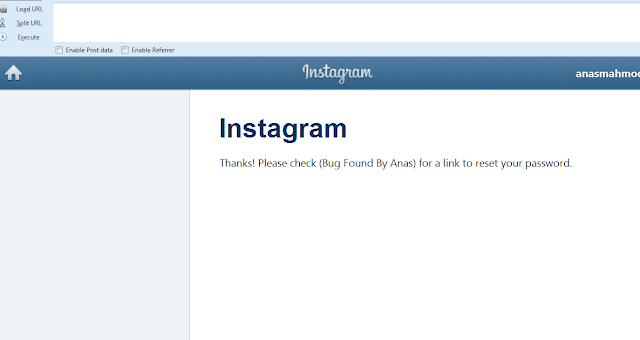
I found a content injection (content spoofing) issue on Instagram’s password-reset confirmation page. A query parameter on the page was reflected directly into the response without validation, so an attacker could control a piece of the text shown to the victim — under Instagram’s own trusted domain. It’s a low-severity reflection-only bug (no script execution), but it’s a textbook example of why reflecting user input unvalidated is dangerous, especially on a page tied to account recovery.
What is content injection?
Content injection — also called content spoofing — is an attack made possible by an injection flaw in a web application. When an application doesn’t properly handle user-supplied data, an attacker can feed it content (typically through a parameter value) that gets reflected back into the page. The result is that the victim is shown attacker-controlled content, but presented under the context of a trusted domain.
It’s less severe than XSS because the injected content is treated as text, not executed as code — but that trusted-domain framing is exactly what makes it useful for deception, particularly phishing.
The finding
On Instagram’s password-reset confirmation page, a parameter was reflected into the page’s text without validation. Supplying a value in that parameter caused it to appear directly in the content the user sees — meaning an attacker could place arbitrary text of their choosing onto a genuine instagram.com page.
Because the injected value is rendered as plain text (not executed), this was a reflection-only content-spoofing issue rather than XSS. But the implication is that a crafted link could show a victim a message of the attacker’s choosing — for example, text steering them toward contacting an attacker-controlled address — all while the browser’s address bar still read instagram.com.
Why it matters
On its own, injecting text onto a page sounds minor. The risk comes from where it happens and what context it borrows:
- It’s on a trusted domain. Users trust what they see on
instagram.com. Attacker-controlled text there inherits that trust. - It’s on an account-recovery page. Password-reset flows are exactly where users are primed to follow instructions. A spoofed message here is more believable than almost anywhere else.
- It’s a phishing enabler. The classic abuse is injecting a fake “contact support at…” message or a misleading instruction, turning a legitimate page into a lure.
Content spoofing is routinely rated low severity, and that’s fair — but on sensitive flows it’s a meaningful stepping stone, which is why it’s worth reporting and fixing.
The fix
The remediation is the same principle that stops the whole injection family:
- Don’t reflect raw user input into pages. If a value must be displayed, validate it against an allow-list of expected values, or don’t echo it at all.
- Encode output for its context so reflected data is unambiguously treated as text.
- Be especially strict on sensitive flows — authentication, password reset, and recovery pages should reflect as little user-controlled data as possible.
Thanks for reading — happy hacking!

Leave a Reply